


If you lived anywhere near the Augusta-Aiken area, which the locals and local governments call the CSRA (Central Savannah River Area), in a certain era you would have heard people referring to “The Plant.” The Plant would come up in casual conversations among friends and families about employment, the local economy, the Cold War, and all manner of daily life. The Plant referred to the Savannah River Plant or SRP, a 350-square-mile facility constructed in the 1950s to manufacture tritium and plutonium for use in the nation’s hydrogen bomb stockpile. The Savannah River Plant, now called the Savannah River Site or The Site, has been a part of the culture and history of Augusta, Aiken, and small communities like Williston since it was announced by President Truman in 1950. Some small towns felt the impact more than others, with a few being completely wiped off the map for its construction. People in those towns were evacuated in a forced relocation so that the huge plant could be built on the South Carolina side of the Savannah River, 20 miles downstream from Augusta, Georgia. At its height in the Cold War, The Plant employed over 25,000 people in the CSRA.
Part of the reason I started this Substack was to write and share some of my memories. Some will be longer than others and some probably need to be serialized into multiple stories. The history and operation of the Savannah River Plant are so woven into my history and the history of my family that I figured I should give some background on it here in an early post. It is part of my life in unexpected ways. The most recent example came up in a very wild conversation I had with my dad six months before he passed away and I will be writing about that conversation in depth later.
Many members of my family worked at The Plant starting with my grandfather on my mother’s side. He started working there in 1951 at the very beginning of its construction. My mother, sister, and brother-in-law all worked there along with members of my high school class and many people who called Williston home. I even worked there in the summer in 1989 while on college summer break and it’s where I developed my love of the Apple Macintosh. In 1989, the Savannah River Plant was the largest installed user base of Apple Macintosh computers in the world. Needless to say, it was a huge part of many people’s lives and livelihoods and it still is today. Its reactors may be retired and in shutdown, but it remains a large source of employment and economic activity for the CSRA. This article will focus on some of the quirky history of the plant and what its announcement and construction did to this very rural part of South Carolina.
The Plant’s origins can be traced back to the end of World War II. The highly secretive Manhattan Project ushered in the nuclear age with two atom bombs being dropped on Hiroshima and Nagasaki which resulted in Japan’s unconditional surrender on the decks of the USS Missouri in Tokyo Bay. This deadly and potentially civilization-ending technology was like a genie that was released from its bottle and would cast a shadow over the world for the next 80+ years. Wars have been started, one very recently, to prevent bad actors from acquiring the bomb. When our World War II allies of convenience, the Soviet Union, performed a test detonation of a nuclear bomb in 1949, the nuclear arms race began. The Soviets had already expanded their territory in Eastern Europe and were occupying half of Berlin because of their victories in World War II. The US government knew if war came with the Soviets, nuclear weapons would likely be used, and after the Soviet nuclear test, the US accelerated its nuclear projects including work on the newer hydrogen bomb which would be orders of magnitude more powerful than the bombs dropped on Japan. To this end, President Truman directed the US Atomic Energy Commission to begin building the infrastructure to support this new arms race and production of the hydrogen bomb. A facility would be needed to produce the plutonium and tritium that would be needed for the hydrogen bomb.
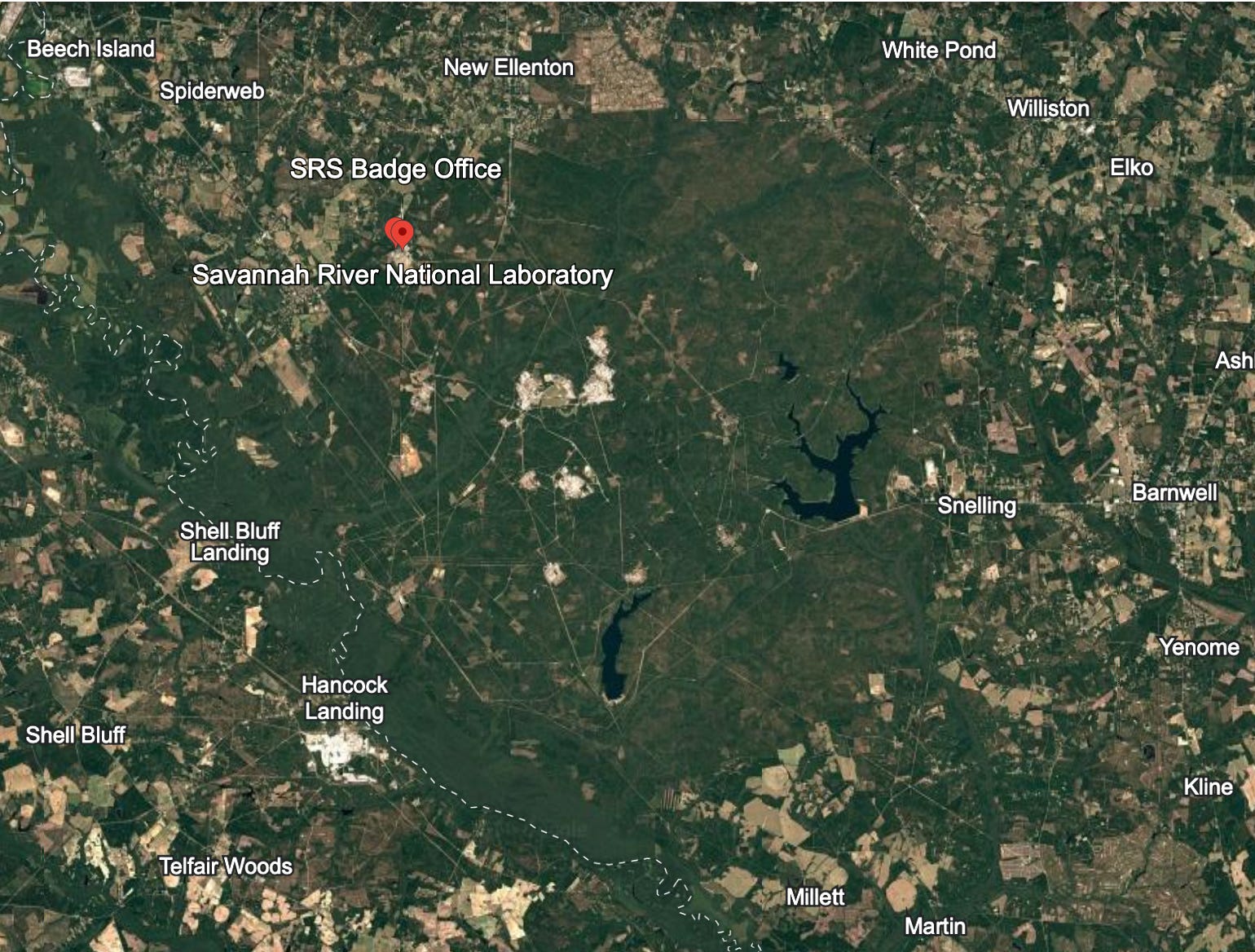
The AEC began its site selection process looking for a location for this production facility. The site needed to be remote for security and have access to cold water to be used as coolant for its reactors. A nationwide search was conducted and was eventually narrowed to sites in Indiana, Wisconsin, South Carolina, and one that straddled the Texas and Oklahoma border. The AEC and Congress finally settled on Site 5, the code name for the South Carolina location. The South Carolina site was located on the banks of the Savannah River about 20 miles downstream from Augusta, Georgia. Site 5 fit the criteria of the AEC and Congress as it was remote, heavily wooded, and on the banks of the Savannah River which would provide it with a seemingly unlimited supply of cold water for its production reactors. It was close to Augusta and Aiken which could provide homes and resources for the construction and operations workforce. While it was a remote and heavily wooded site, there were people who lived within its potential 350-square-mile boundaries. Not only did it have an agrarian rural population but there were actual towns within the boundaries of Site 5. Small towns like Dunbarton, Ellenton, Myers Mill, and several smaller villages would have to be condemned, uprooted, and relocated.
The contract for the construction of the site was awarded to DuPont de Nemours, Inc., known commonly as DuPont. DuPont’s agreement was to build the site and operate it at its cost plus $1 profit. DuPont operated at cost out of a sense of patriotism and to help secure the nation’s national defense. It is inconceivable to me today that any company would behave in this manner. Can you imagine a company undertaking what is still regarded as the largest construction project in US history for no profit at all? Not in this day and age, I think.
The people living in the larger towns of Dunbarton and Ellenton started to notice people coming into their communities making photos, conducting surveys, and drilling for core samples. While Site 5’s selection and potential use as a nuclear weapons production complex was still top secret, it would not take long for these US citizens to learn that their homes would be wiped from the map. They were early casualties of the Cold War
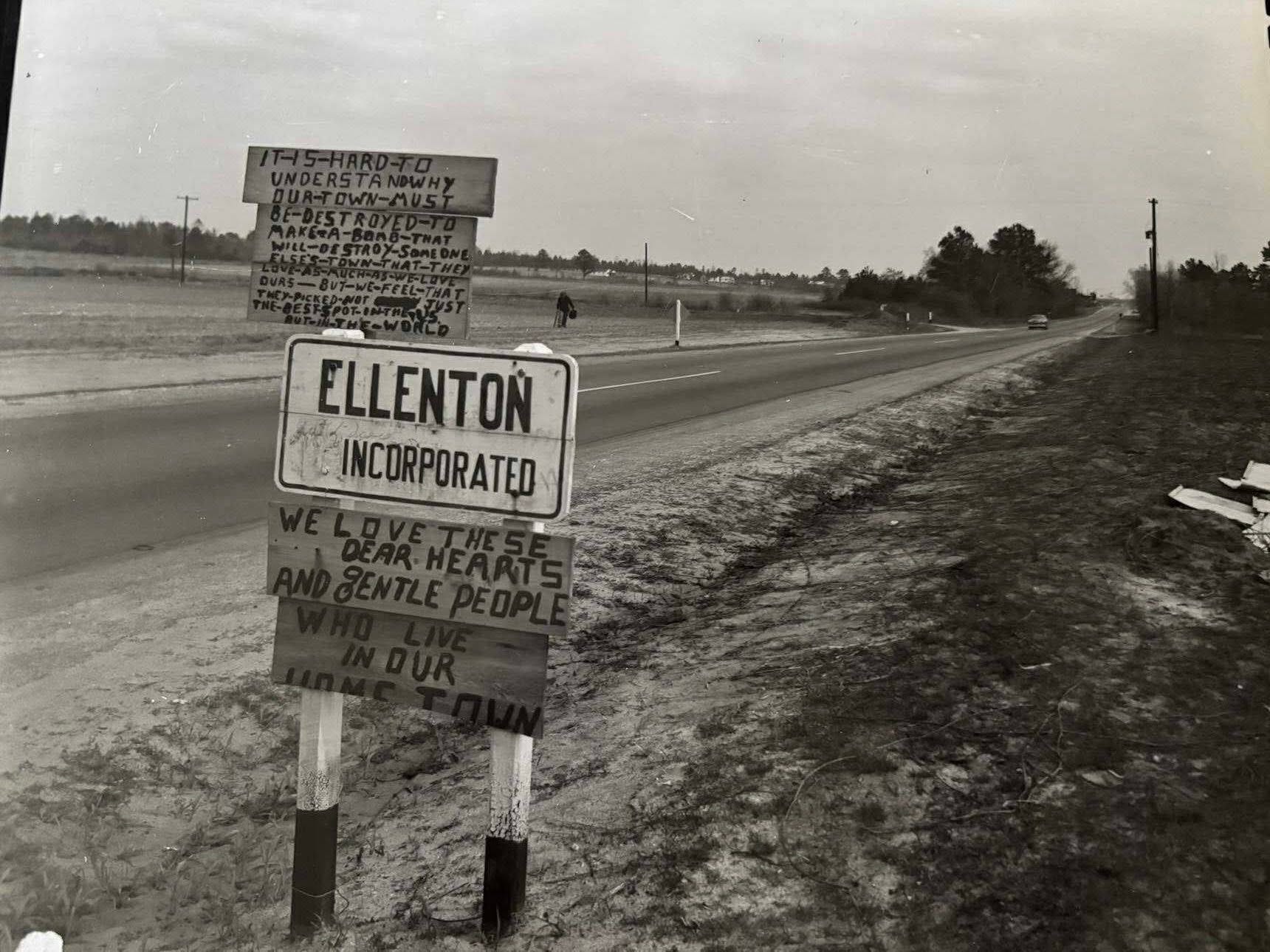
Once the announcement was made that Site 5 had been selected and something called the Savannah River Plant would be constructed on this land in rural South Carolina, the citizens within Site 5’s boundaries learned the news that the places they had called home would soon be no more. These included formerly enslaved people and their descendants who had become sharecroppers working the land in this rural part of South Carolina. They would all have to move and start anew somewhere outside the boundaries of The Plant. Everything and everyone would have to be moved, both living and dead. Not only were the populations moved but the cemeteries as well — animals, houses, equipment, just about everything that gave these places their character and identities. Homes and structures that could be moved were; the others were either demolished or repurposed as offices for the construction and early operations workforce. The Army Corps of Engineers was tasked with acquiring the land and the residents were paid for their land and homes, but if the owner was not satisfied with the appraisal, the land was condemned and the final price was worked out in court.
The towns of Williston and Barnwell absorbed many of the homes, people, and graves of Dunbarton. The people of Ellenton moved just outside the Site 5 boundary and started a new community called New Ellenton which is just outside the main gate (or barricade) of The Plant. There is a bar-b-que restaurant in New Ellenton that my family frequented nearly every Friday night for years and I never knew why it was called New Ellenton until years later. Many of the kids in my elementary school were children or grandchildren of residents of Dunbarton, and when they mentioned having a grandparent from Dunbarton I usually had no idea what they were talking about.


When the forced evacuation occurred many homes and residents of Dunbarton were moved to and absorbed by Williston where I spent most of my childhood and teenage years. Once I understood what the Savannah River Site was, I became fascinated by its history. The fact that an entire cemetery had been relocated to Williston was just fascinating to me. The main Williston cemetery is split by a road where Williston residents are buried on one side and the people and descendants of Dunbarton are buried on the other side to be with their ancestors’ relocated graves. My grandparents and mother are buried on the Williston side, but I know many people who have been buried on the Dunbarton side. Some small, forgotten family cemeteries remained within the boundaries of Site 5. I remember one of my grandmother’s cousins bragging about climbing one of The Plant’s remote security fences to venture through the heavy woods to visit some old family graves. My grandmother warned her she would end up under the jail if she were ever caught.


The ghosts of Ellenton and Dunbarton are still there. South Carolina Highway 125 runs through a remote part of The Plant and passes through what was one of old Ellenton’s main streets. SC 125 runs from North Augusta through the backcountry to Savannah and is easily accessible; however, during the Cold War if you wanted to use highway SC 125 your car would have been stopped and inspected before entering The Plant’s boundaries. As you pass through the site now, there is a historical marker at the site of old Ellenton, and if you look closely as you drive through on SC 125 you can see sidewalks, curbs, and driveways, and you can imagine where stores and old homeplaces once stood. In your mind’s eye you can see people walking up and down these sidewalks to visit neighbors, visit the general store, or meet a train at the old depot. The remnants of Dunbarton and Myers Mill lie deep within the more secure parts of Site 5. I did visit Dunbarton once as part of a high school tour and I remember the bus driving deep into the woods. In the middle of what looked like a jungle emerged the remnants of sidewalks, driveways, and old home sites. It was very eerie.
My grandfather began working at the Savannah River Plant in 1951 during construction. The populations of Williston, Aiken, Barnwell, and many others swelled with the construction workers who were tasked with building this massive complex. An enormous workforce would be needed to build the nuclear reactors, heavy water separation facilities, nuclear waste facilities, and power plants that would all be built simultaneously and with great speed. Not everyone in these communities was happy about these developments and strangers moving into their towns. Many locals started referring to it as The Bomb Plant and called the construction workers bummers, a slang for bombers. My grandmother had a friend who became famous for making those Barbie doll dress cakes later in life who absolutely despised the bummers. Not everyone felt this way; most people realized that this massive construction project was for the nation’s defense and would be bringing good, well-paid, and highly skilled jobs to the CSRA.
Construction commenced in 1951 on the first of five reactors, R Reactor, which was completed in 1953 and achieved criticality that same year. All the reactors were completed with remarkable speed and production began in just three years from the initial announcement, a remarkable pace by any standard.
My grandfather and later my mother both possessed a Q clearance, which is the Department of Energy’s highest security clearance, meaning they could see, read, and review highly classified/top secret materials. Many of the workers had various levels of security clearances. When I was young, it was not unusual for FBI agents to show up at your front door to ask your parents about their neighbors who may have gotten a job at The Plant or needed their clearance renewed or upgraded. My grandparents and my mother took security very seriously and were often very vague about what sort of work they did and what went on at the Savannah River Plant. My grandfather just said he worked at “The Plant” or he worked for DuPont with very little detail. I remember one time asking my grandmother what they made at The Plant and she told me things for war. Myself, being very inquisitive at a young age and even more curious about “things for war,” asked, “What kind of stuff?” and her reply was simply: “propellers for airplanes.” This nonsensical answer seemed to satisfy me at the time since I enjoyed building model airplanes, but I also remember thinking, “I thought we had jets now.”

DuPont operated the plant until 1989 and the end of the Cold War. DuPont desired to continue running SRP; however, at the time of the contract renewal with the US government, DuPont requested some liability protection due to waste and post-war cleanup. I am sure DuPont thought this was a reasonable request since they had built and operated The Plant without a profit for nearly 50 years; however, Congress did not see it that way and DuPont elected not to renew the contract. A new consortium called Westinghouse Savannah River Company made up of Westinghouse and other contractors was awarded the contract in 1989, and WSRC took over plant operations and cleanup. WSRC changed the name to the Savannah River Site which they believed was more reflective of the new era and mission of the site. The Plant was always a massive area of land with multiple plants (nuclear, power, chemical separations) located within it so Westinghouse believed this new name was more appropriate. The Savannah River Site or SRS continues to employ about 10,000 people in the region.
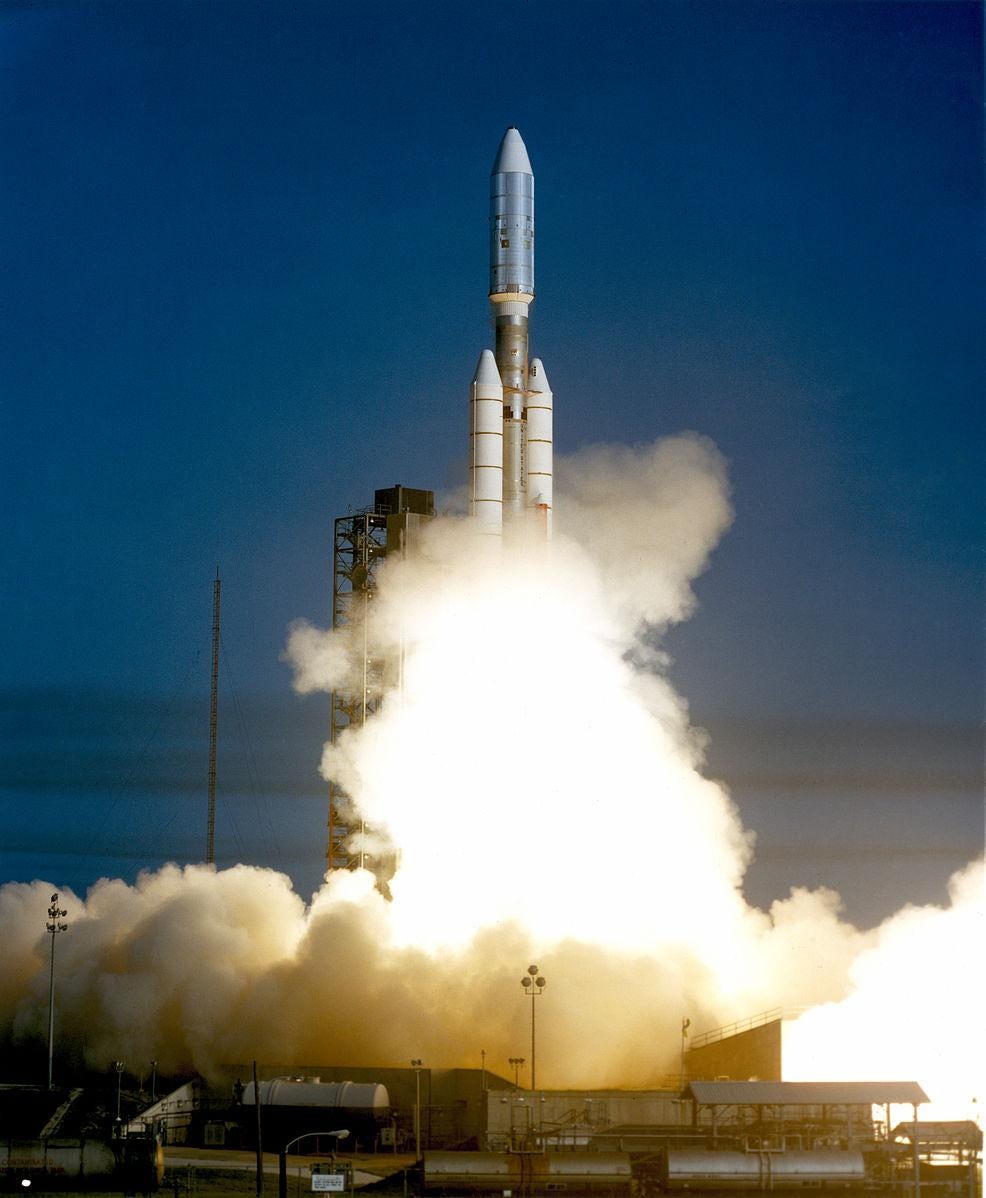
The Plant is responsible for a lot of scientific advancements including the discovery of the neutrino in P Reactor in 1956 and production of plutonium-238 to fuel the Voyager 1 and Voyager 2 space probes launched in the 1970s. Voyager 1 has now left our solar system and moved into interstellar space relying completely on its fuel produced nearly 50 years ago at the Savannah River Plant.
Today, The Plant is one of the most toxic sites on Earth and its work is focused on Cold War production cleanup. It also continues scientific innovations in both commercial and national defense areas and works to limit nuclear proliferation by acquiring and storing surplus weapons-grade materials. It created an innovative solution for cleaning up its radioactive liquid waste by immobilizing it by mixing it with sand and turning it into glass. After the 2011 Fukushima nuclear disaster in Japan, the only location on Earth that had some of the heavy equipment needed to help get the Fukushima reactor under control was located at SRS and the Department of Energy and SRS shipped this equipment to Japan to aid our Japanese allies. Since its announcement in 1950, The Savannah River Plant changed the lives and trajectories of many people and communities and will likely do so for many years to come. I was always proud that my family starting with my grandfather, mother, sister, niece and brother-in-law worked at The Plant and their work helped bring the Cold War to a close. As I try to write more frequently, The Plant will occasionally come up in the stories of my life and those of my friends and family.
TL